Featured image: Virtual reality headset, Wikimedia Commons.
Virtual reality is moving beyond traditional headset upgrades. This week’s most important developments show the industry advancing on three fronts: bringing PC-quality experiences to standalone devices, making mixed reality more emotionally immersive, and designing dependable hardware for enterprise deployments. For VR enthusiasts, developers, and businesses, these trends reveal how quickly immersive computing is becoming more capable and more closely connected to everyday spaces.
Half-Life 2 Runs on Quest 3 Without a Gaming PC
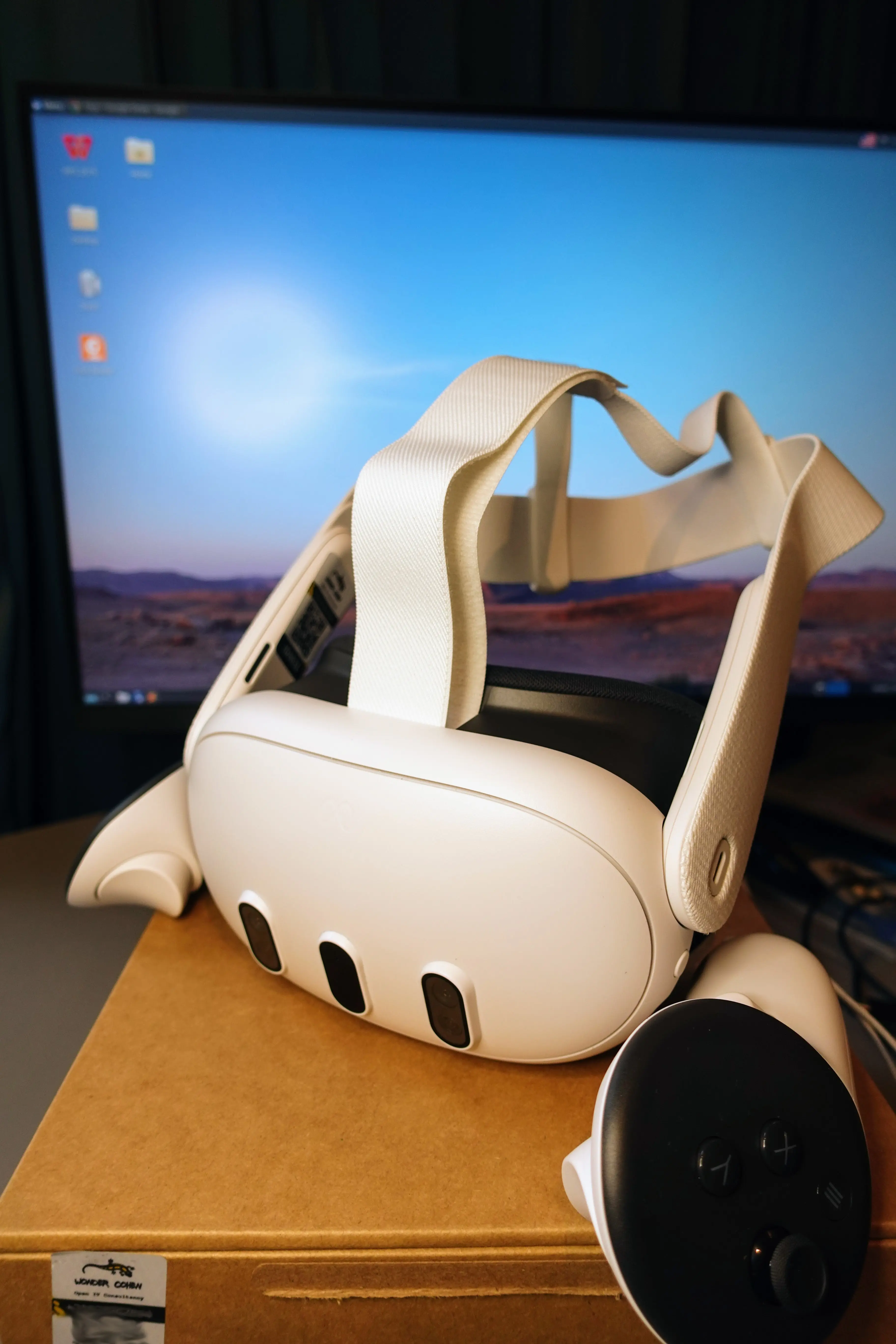
Image: Meta Quest 3 headset, Wikimedia Commons.
One of the most technically interesting developments is the progress of WinlatorXR, a community-driven Windows compatibility layer for standalone VR headsets. The software combines Wine with Box64 and FEX to translate Windows applications and x86 instructions for ARM-based hardware. On compatible devices, including Meta Quest 3, the system can run selected Windows games without a connected computer.
Early demonstrations have focused on Half-Life 2 and Portal. This is not the same as installing a conventional VR title from an official store: users typically install WinlatorXR through SideQuest, and compatibility depends on the game, graphics settings, and headset model. Even so, the project is an important technical milestone. It suggests that standalone headsets may become more flexible general-purpose computers rather than devices limited to applications approved for a dedicated storefront.
Performance remains the main challenge. Users should expect configuration work, variable frame rates, and an experimental interface. However, every improvement in translation, rendering, and controller support makes a wider range of legacy PC software possible on mobile XR hardware.
Mixed-Reality Horror Brings Actors Into the Living Room
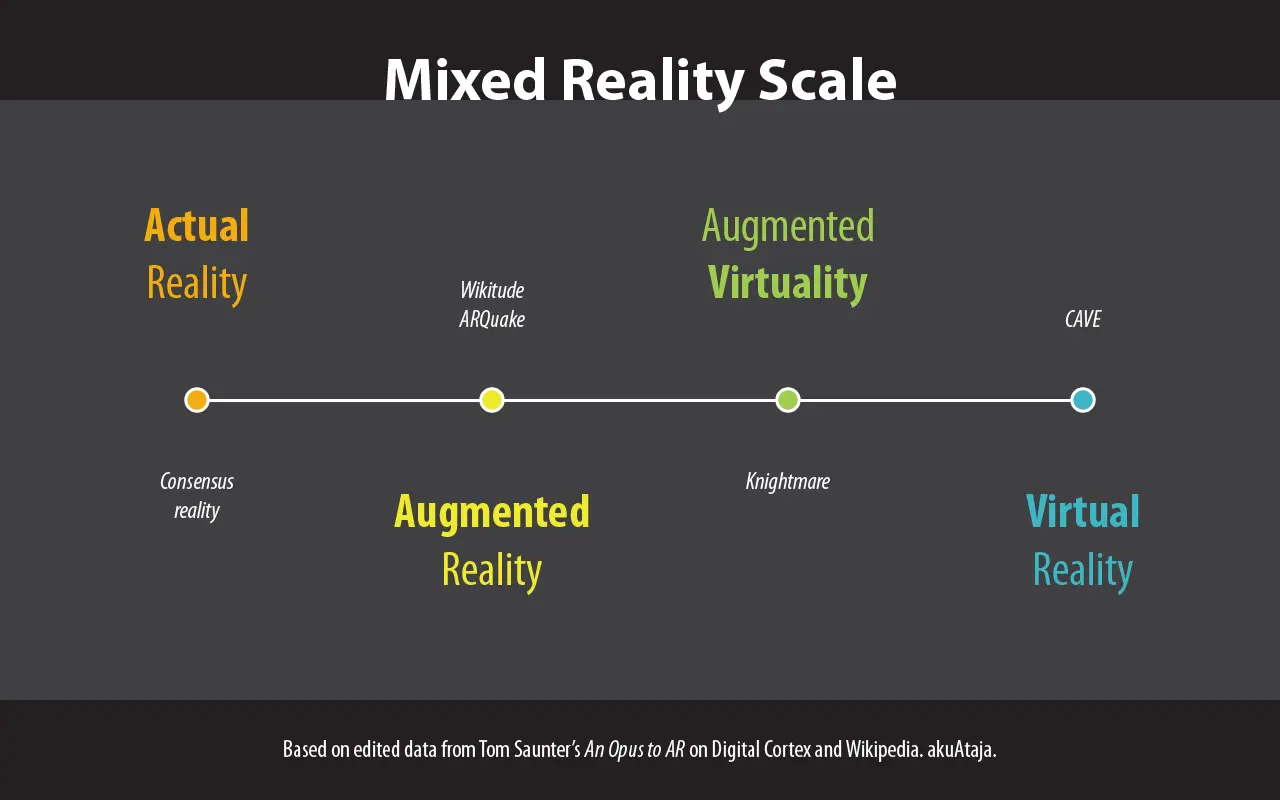
Image: Mixed-reality spectrum illustration, Wikimedia Commons. The image illustrates the concept and is not a screenshot from Spirit Ritual.
At the August VR Games Showcase, UK studio Nyamyam introduced Spirit Ritual, a mixed-reality horror game designed for Meta Quest, PICO 4, and SteamVR. The project combines passthrough video with filmed performances by real actors, making supernatural characters appear inside the player’s physical environment.
This approach changes the role of the room around the player. Instead of entering a completely virtual haunted house, the player may see a threatening figure appear beside a real sofa, doorway, or bookshelf. Familiar surroundings can make the experience feel more immediate, while live-action footage adds a cinematic quality that differs from fully computer-generated characters.
The game does not yet have a confirmed release date, but the concept reflects a broader shift in mixed reality. Developers are increasingly treating the home itself as part of the level design. As passthrough quality, spatial mapping, and occlusion improve, mixed-reality experiences can create tension by blending digital events with places users already know.
DPVR Clarifies the P1 Max Enterprise Timeline
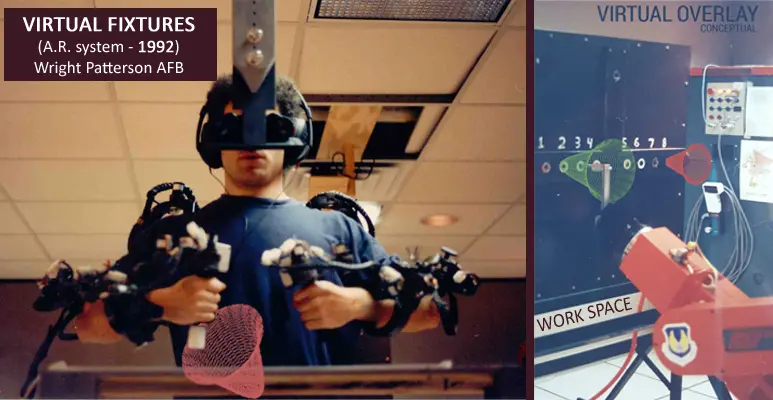
Image: Historical virtual-reality system, Wikimedia Commons. This is an illustrative enterprise-VR image, not the DPVR P1 Max.
DPVR has provided new details about its P1 Max enterprise headset, including pricing and an updated delivery schedule. The company lists a standard model at $549 and an eye-tracking version at $799. Sample and test orders for enterprise customers are expected to begin in November 2026, with broader shipping planned afterward.
The headset is built around a Qualcomm Snapdragon XR2 platform and includes a 3664 × 1920 binocular display, 6GB of RAM, 128GB of storage, Wi-Fi 6, and 8K video decoding. Its most notable design feature is an active dual-vent cooling system, which DPVR says can improve cooling efficiency by up to 50 percent compared with the previous generation. That performance claim comes from the manufacturer and still requires independent testing.
The revised timeline is a reminder that enterprise VR hardware often follows a different path from consumer products. Compatibility testing, pilot deployments, support requirements, and long-term thermal stability can be more important than an immediate retail launch.
What These Developments Mean for VR
This week’s news highlights a clear direction for the industry. Standalone headsets are becoming more capable, mixed reality is becoming more personal and context-aware, and enterprise hardware is focusing on reliability as much as visual quality.
For VR enthusiasts following immersive entertainment, these developments show how quickly standalone hardware and mixed-reality experiences are evolving. The next stage of VR will not be defined by one specification alone. Success will depend on how easily users can access software, how naturally digital content fits into physical spaces, and whether devices can deliver dependable performance over long sessions.
Final Takeaway
The most meaningful VR progress this week is happening at the intersection of software and hardware. WinlatorXR expands what a standalone headset can run, Spirit Ritual demonstrates how mixed reality can use the player’s own room, and DPVR’s P1 Max shows the continuing push toward practical enterprise deployments.
Stay with xMonter for more VR technology news, headset updates, and practical coverage of immersive computing.
Sources: